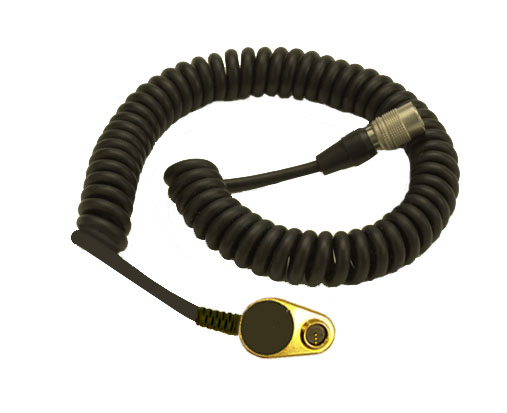
Contact Memory Buttons

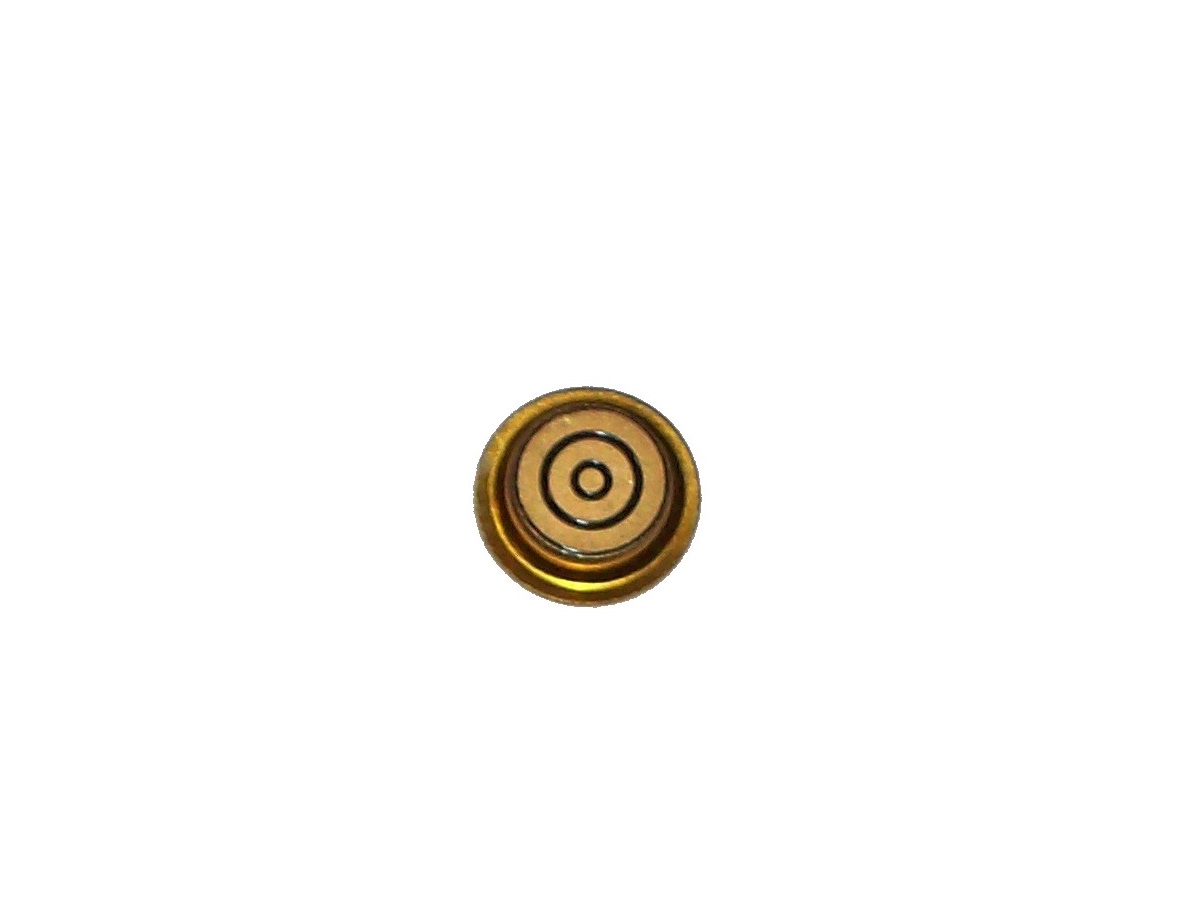
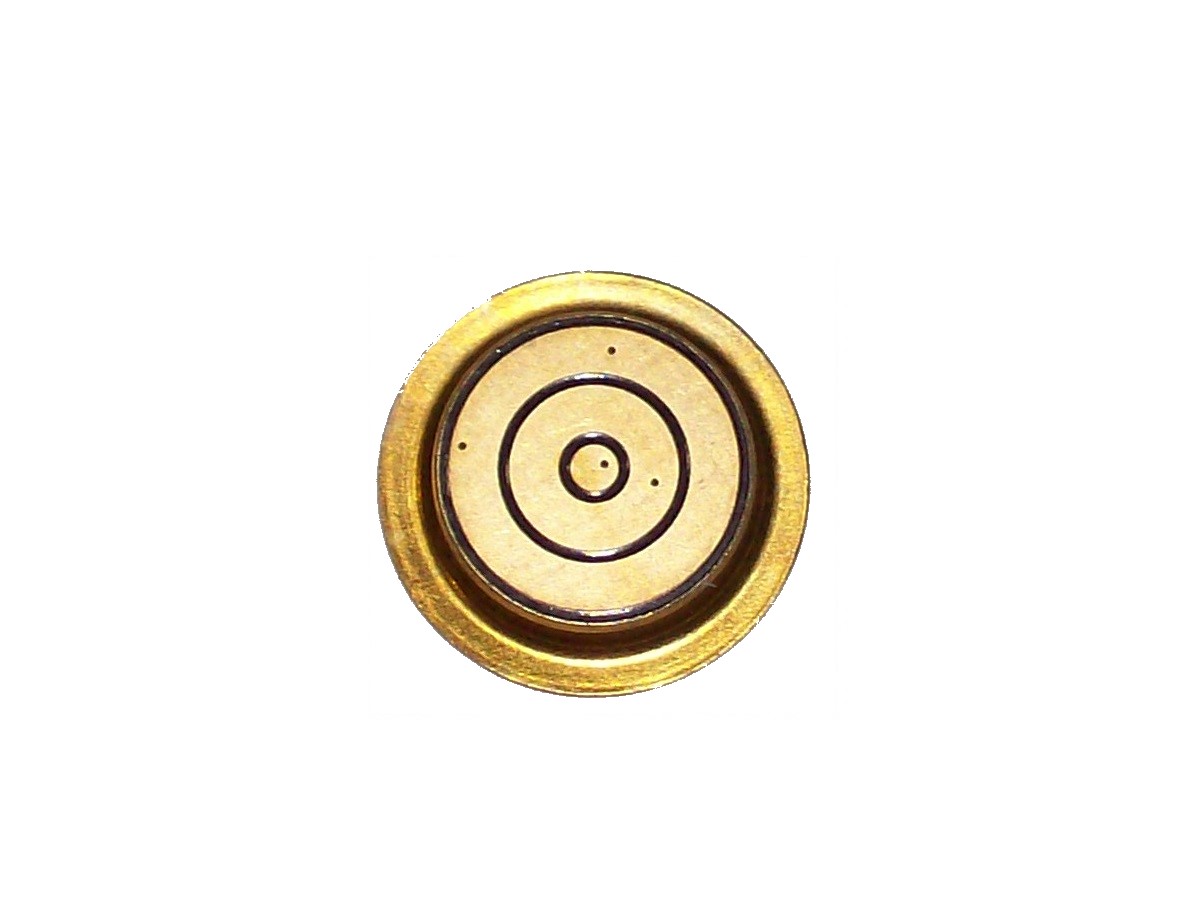
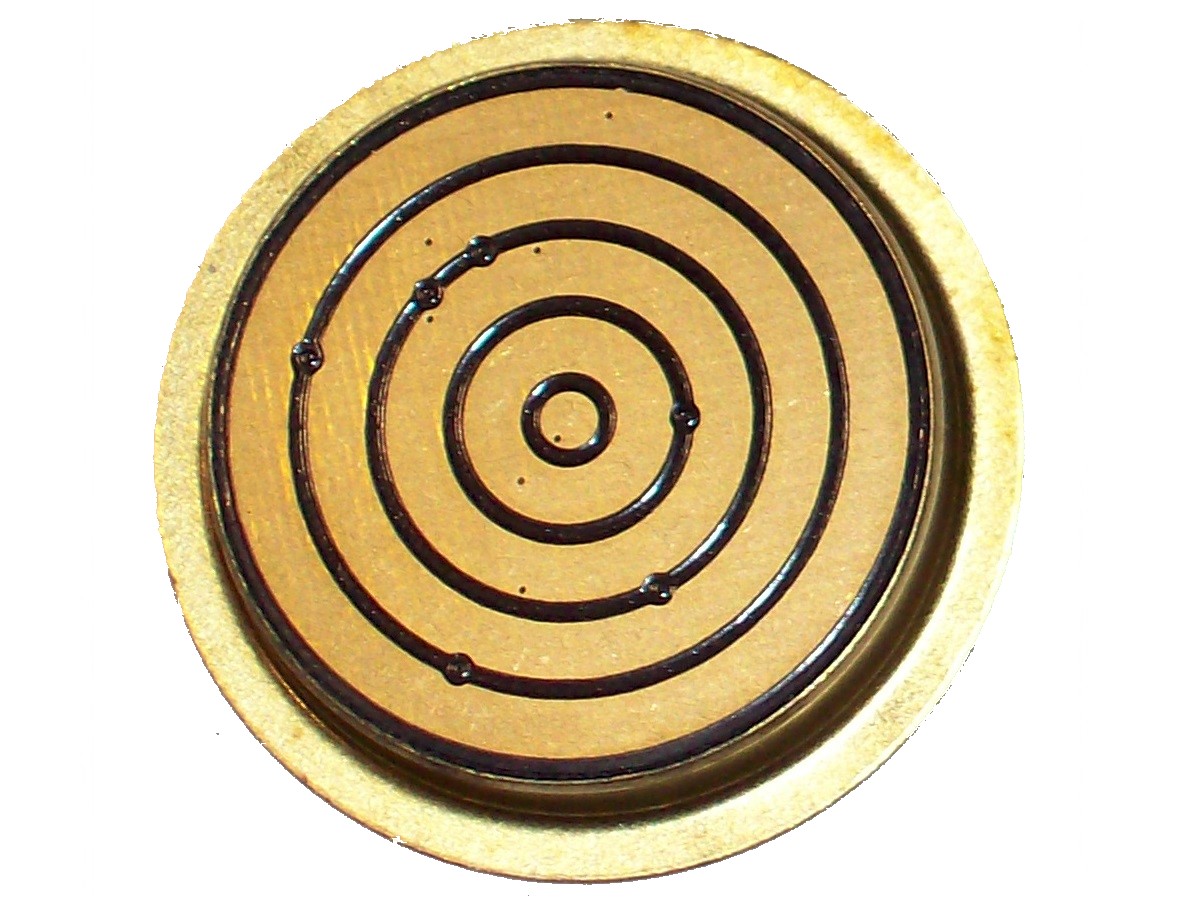
MacSema ButtonMemoryâ Contact Memory Buttons (CMBs) are updateable memory devices. Each has a unique serial number and attached to an asset or location serves as a rugged identifier and updateable logbook allowing inspection and maintenance to be tracked electronically through the asset’s life. This eliminates time spent on hand data entry and associated human errors.

CMB’s identify components as well as electronically enhance inspection and maintenance record keeping, manufacturing and configuration management. They are capable of storing technical manuals and schematics as well as maintenance history right on an asset. CMB’s are impervious to most environments, have no power source and last the life of the application.

MacSema products are in use for configuration tracking by the US Army, Navy, Coast Guard, Air Force, Marines, NATO and commercial companies such as Boeing, GE, and rail road and power facilities world wide for maintenance, inspection and asset control.

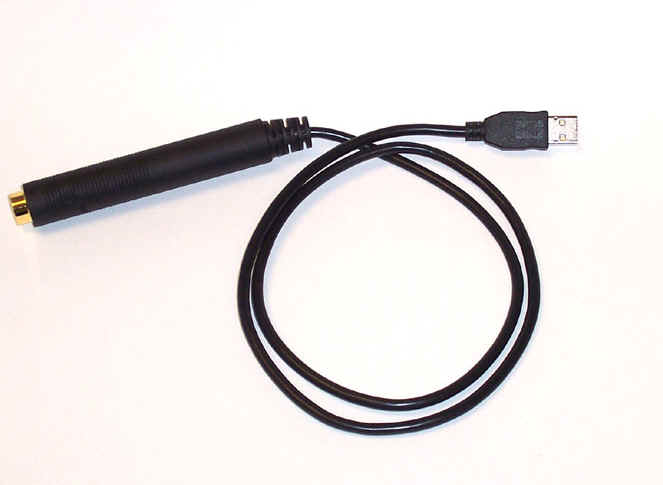
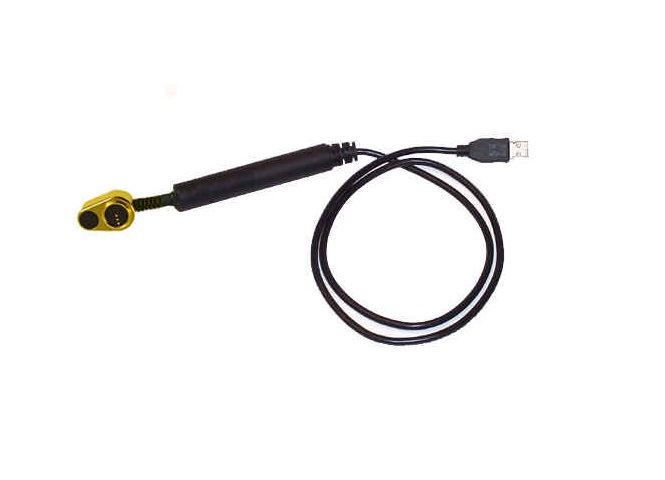
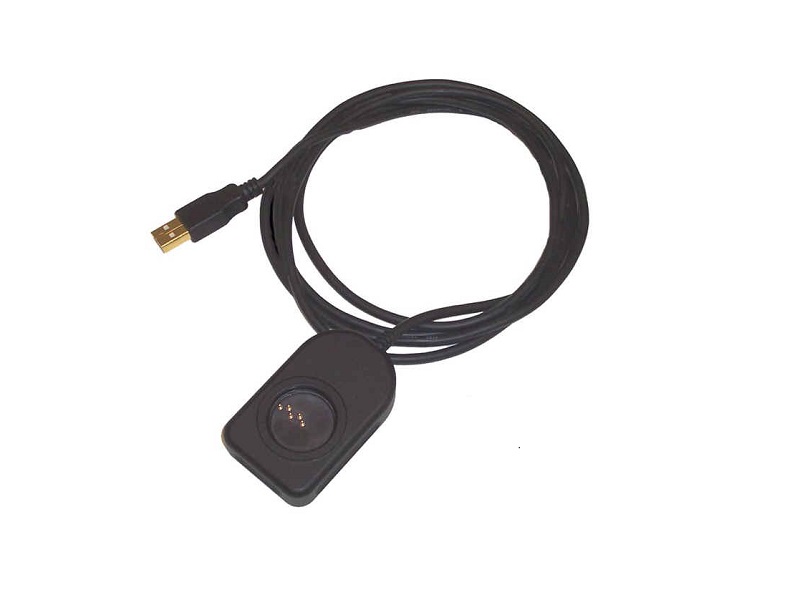
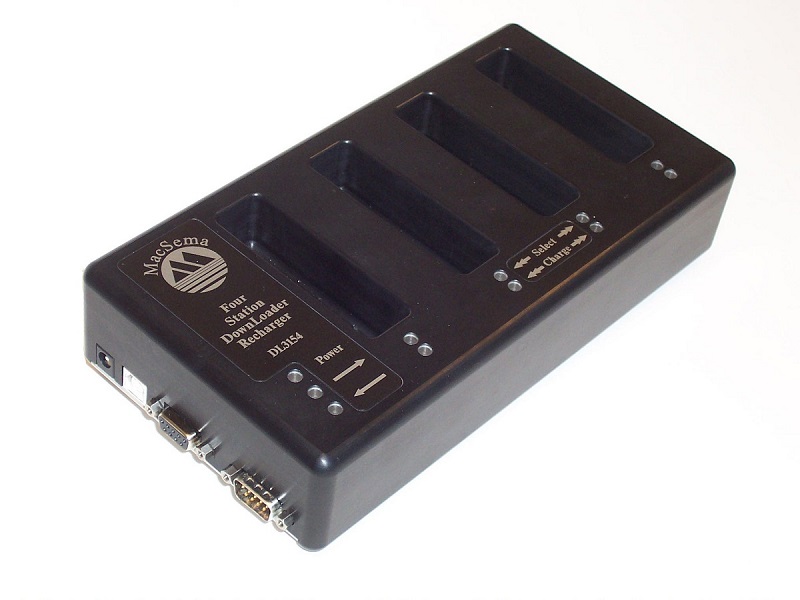
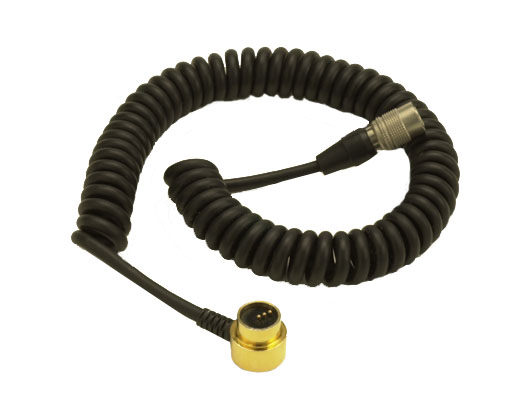
Information stored on the button is updated with a momentary touch using a variety of hand helds or probes with USB or serial interfaces. Each touch also time stamps and transfers the button's unique serial number. Data stored on the button can be viewed in a variety of formats to facilitate the user in performing his job. For instance, an inspector may touch the button to pull up a form on a pen-based hand held. After completing his task, the changes are written back to the button and saved to the data collector. Information is downloaded to a PC eliminating someone reading hand written notes and typing into a database. 

The flexibility provided by ButtonMemory technology (read, add and modify data on the asset), it’s durability and virtually unlimited operating life, offers inventory managers and maintainers the ability to dynamically access and update data on an asset at any point in the pipeline (without changing a label). This offers users the infinite opportunity to improve the quality, accuracy and availability of data, enhance business practices, and lower the cost of operation.

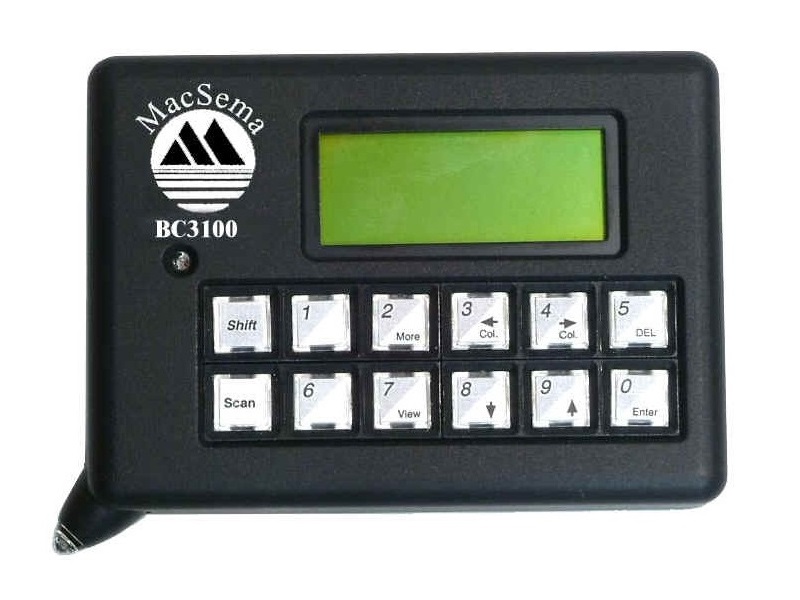
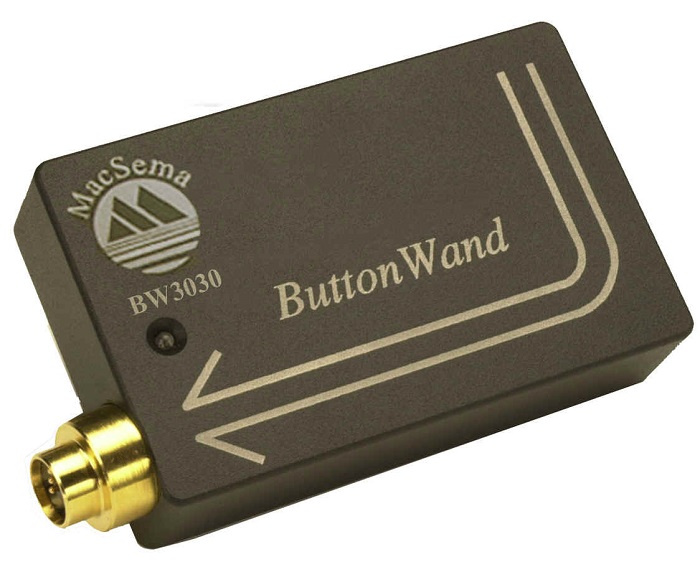
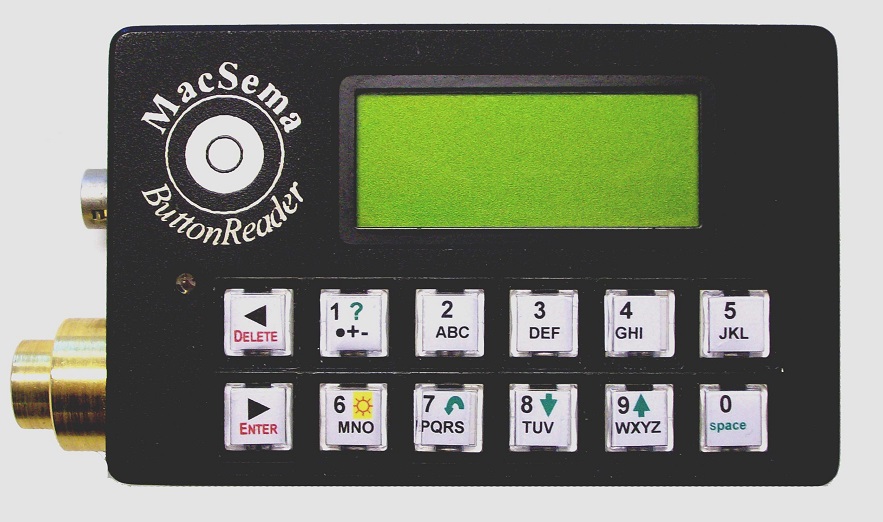
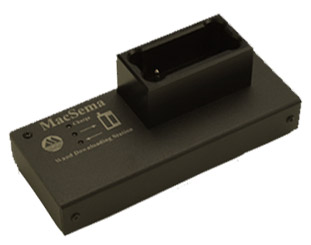
ButtonMemory® read/write contact memory buttons (CMB) are available in different physical sizes, standard, mini and Micro with up to 64K Bytes data storage. MegaButtons are available in 1, 2, 4, 8, 256, 512 Mega Bytes and 1 Gigabyte of data capacity. MacSema also manufactures metal cased, rugged bar code data collectors and Button read/write devices as well as data collectors that read bar codes and read and write to CMB's.

The following Military initiatives are using MacSema ButtonMemory.

  • US Navy tracking part history (log book data) on a family of guided missiles and a helicopter squadron; identifying and tracking ordnance; and is used for calibration of test equipment (for communications suite) of the Aegis cruiser system

  • US Army Intelligence & Security Command

  • US Navy Serial Number Tracking Initiative http://www.snt.navsup.navy.mil/default.shtml
    MiniButtons have been placed at the OEM level on a number of electronic devices.

  • US Army Land Warrior Soldier System. Tracking system configuration and inventory, and maintenance of components of the system.

  • As of  January 2006,  the Army's Aviation Maintenance Automated Tracking System (AMATS) aircraft have flown over 120,000 hours!  84,000 MacSema 32K MiniButtons have been installed on 600+ aircraft at the 2nd Battalion of the 101st Airborne Division, Fort Campbell, KY. CMB’s are fully integrated in the Enhanced Automated Logbook System (ELAS). All Force Modification Aircraft at Fort Rucker will be marked with MacSema Contact Memory Buttons. http://www.mpail.com/AMATS/

  • Eglin AFB Inert Ordnance Inventory tracking

  • Guided Missile Logbook

  • TACOM US Army Tank and Automotive Support Command

  • F-18 E/F

  • H-53, and H-60

  • NATO Maintenance and Supply Agency

  • Navy Seals armament inventory and configuration

  • Mine Warfare

  • Force Provider

  • PROSE

Current ButtonMemory applications assist customers:

  • Tracking of LRU’s by part number, serial number and CAGE Code, etc.

  • Tracking AC and DC motor repair and warranty information

  • Tracking warranty information, vendor performance and configuration management data.

  • Creation of Inspection/Compliance audit trail:
    Provides date, time and technician information for each action.
    Holds Preventative Maintenance Schedule, schematics of LRU, Job control # (JCN).
    Facilitates maintenance tracking throughout repair cycle.
    Part numbers and Technical Directives (TD’s) and modification data stored on asset.

  • Electronic logbook. ButtonMemory provides hooks to database and/or enough data to prevent unnecessary depot maintenance, decrementing of asset operating hours, procurement actions and premature disposal.

  • Tracking of personnel, location, time, payroll, and activities.

  • Tracking of nuclear/hazardous waste material.

  • Interfaced with robotic machines through use of programmable logic controllers (PLC’s) to control environmental testing. This application requires more than 1,700 read write cycles per year per button and temperature extremes from -25F to 400F.

  • Over 400 hours of incident free flight test (as of 1/2000) on main rotor blades for H-3, H-46, & H-53 helicopters at Naval Aviation Depot, Cherry Point whirl tower. This is considered naval aviation’s most difficult static electricity and vibration-operating environment.

  • Over 2000 flight hours on operational H-60 and H-3 aircraft, marking approximately 30 life-limited assets (main/tail rotors, transmission shaft/2,000 rpm's etc.) and avionics components per aircraft.

  • Environmental tests and software demonstrations involving parts history tracking, configuration management and tracking of LRU’s by part number, serial number and CAGE code.


Home ProductsSolutionsDevelopersNews | About | Contact | Search
© 2001 MacSema, Inc.  All rights reserved. Legal