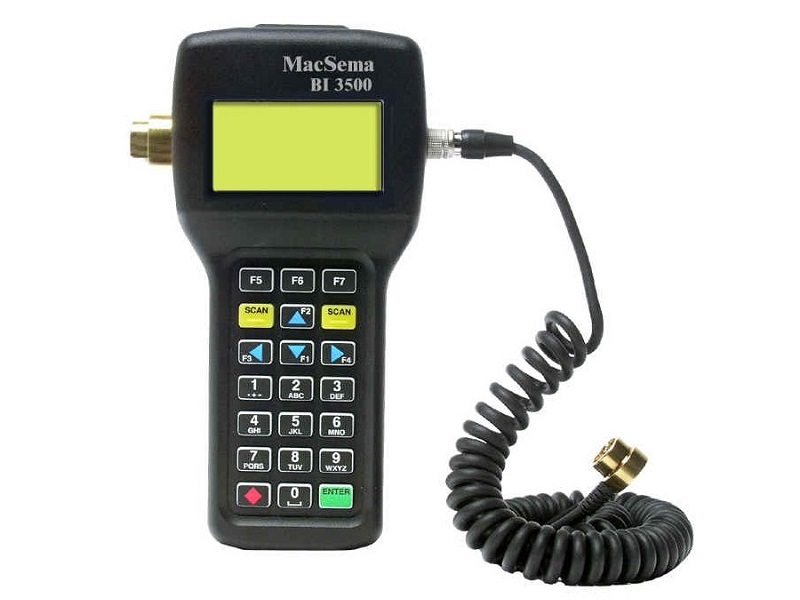
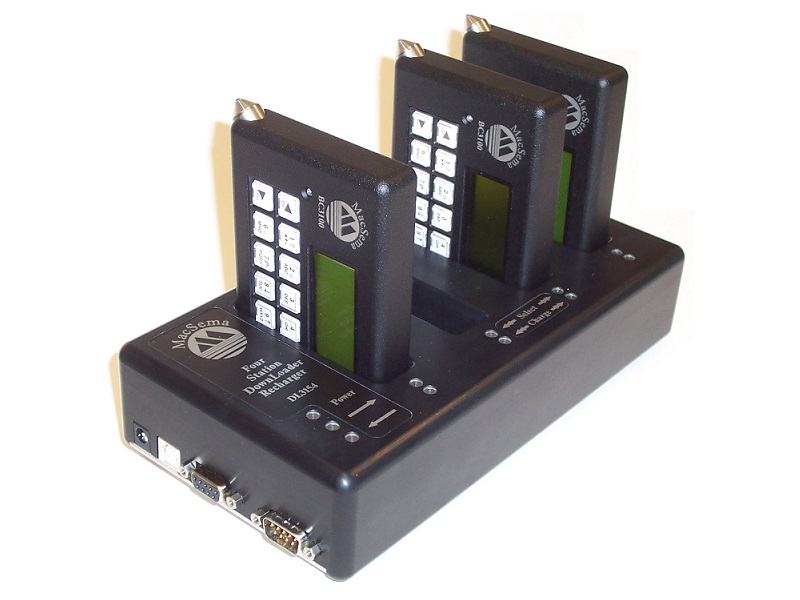
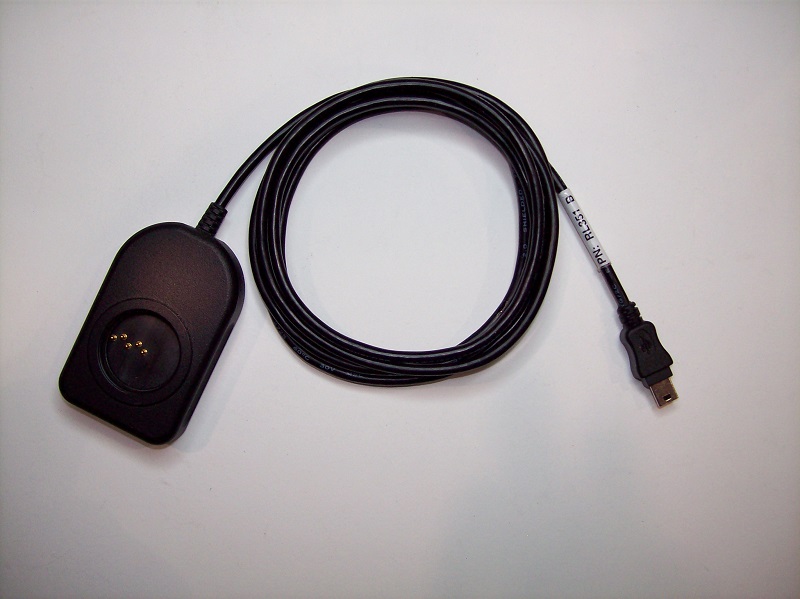
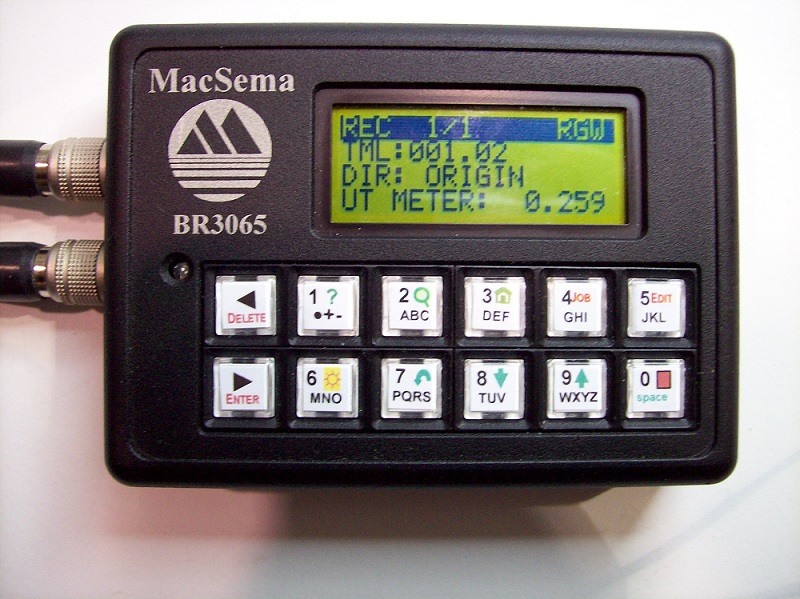
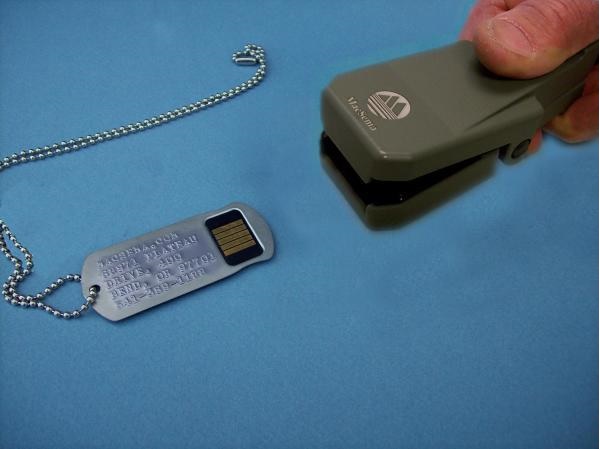
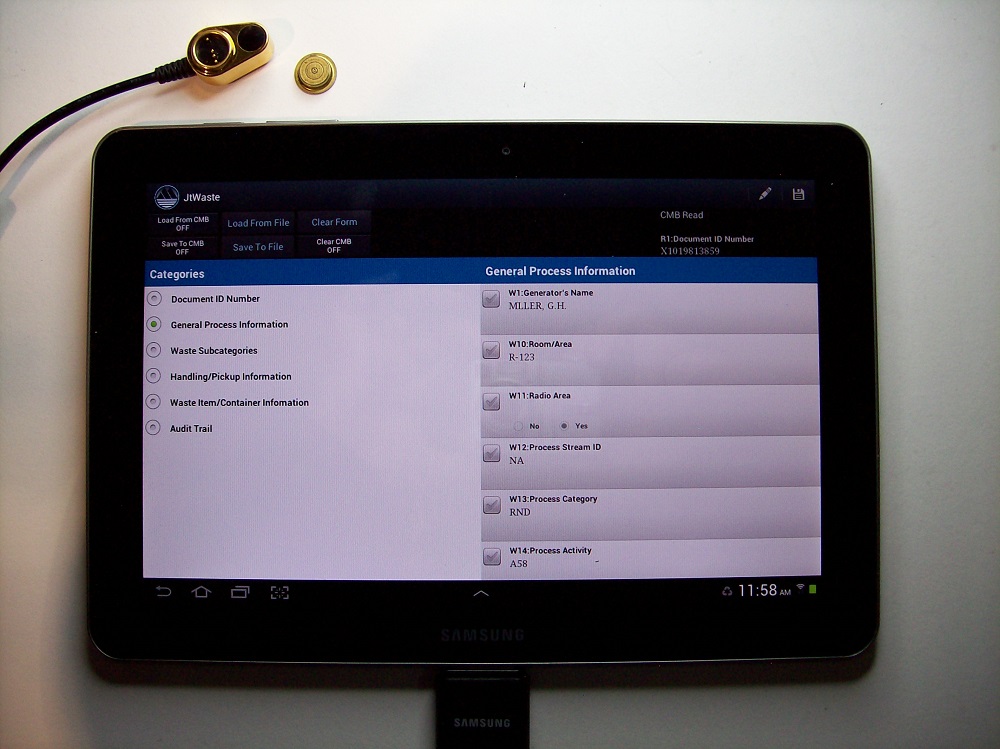
When a cowboy rides the range these day's, it's more likely he'll be packing a handheld scanner than a six-shooter.  Farmers, too, are turning to automatic identification and data capture (AIDC) technologies to gain the wisdom in one growing season that once took years of working the land to accumulate. With a million acres of arable land in the U.S. lost per year to urban sprawl and a worldwide population growing by three hungry mouths per second, our planet's food suppliers must squeeze as much product as they can from land and livestock.

Produce is a perishable commodity, and farmers must equip themselves to handle it efficiently from field to market.  Workforce production tracking takes a field of information beyond basic time and attendance, allowing farmers to capture valuable insights into what works and what doesn't.

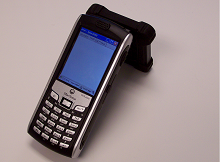
On many farms, field hands are now wearing bar coded badges or electronic buttons that link them to the farm's database.  When scanned with a handheld device, individual workers are identified, and the device records how many units of produce they've picked or how much time they've spent performing other farm tasks with different pay scales, such as washing or packing produce.  At the end of the day, the information is downloaded into the farmer's management system or sent by modem to a central office, where payroll and production are calculated at once.  This ensures that an employee is being paid according to farm policy as well as in accordance with strict state and federal labor laws.  In some states, such as Florida and California, farmers must generate reports verifying compliance.  Electronic payroll systems make report generation far easier.


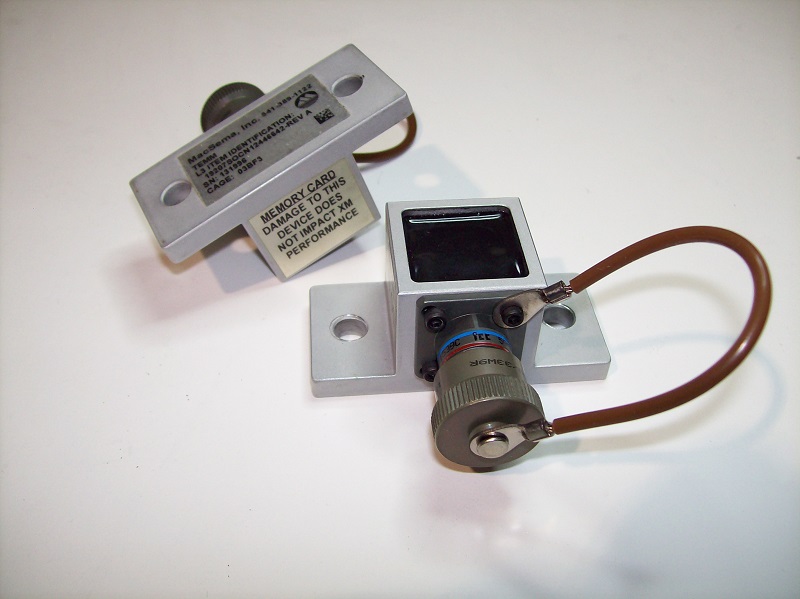
Dole Fresh Fruit Company, for example, uses MacSema's standard 128-byte read/write buttons and  ButtonReader to record the company's harvest of 3.5 million cartons of grapes and tree fruit per year.  "Our own payroll needs were unique enough to develop our own software," said Lynn Brown, business systems manager for Dole.  "Automating data capture opened it up for us to use it in all kinds of other ways.  We're looking at using different fertilizer, trellising, and pruning practices, and we look at the yield to make these longer-term horticultural decision's."

Among other thing's Dole's software takes into account field conditions, time of day, and yield to determine pay scale.  "The unit rate varies by the hour.  The workers may get one rate per unit in the morning and another rate in the afternoon," explained Ms. Brown.  "If the field is muddy, it's harder to pick.  In one area, trees may be dripping with fruit, but in another they may be a little leaner.  Some factors make it harder for them to make units, so they get paid a little bit better."  Time and attendance and production information is poured into Dole's system, where payroll and crop analysis take place on an ongoing basis.

AIDC technologies are slowly replacing manual systems, where a field hand tosses a token into a box or uses a punch card to register that he or she has picked a unit of produce.  With hundreds of workers picking thousands of units each day, it can take hours of manual calculations to yield a sketchy picture at best.  if a discrepancy arises, an accountant has to dig through boxes of data to try to reconstruct the situation.

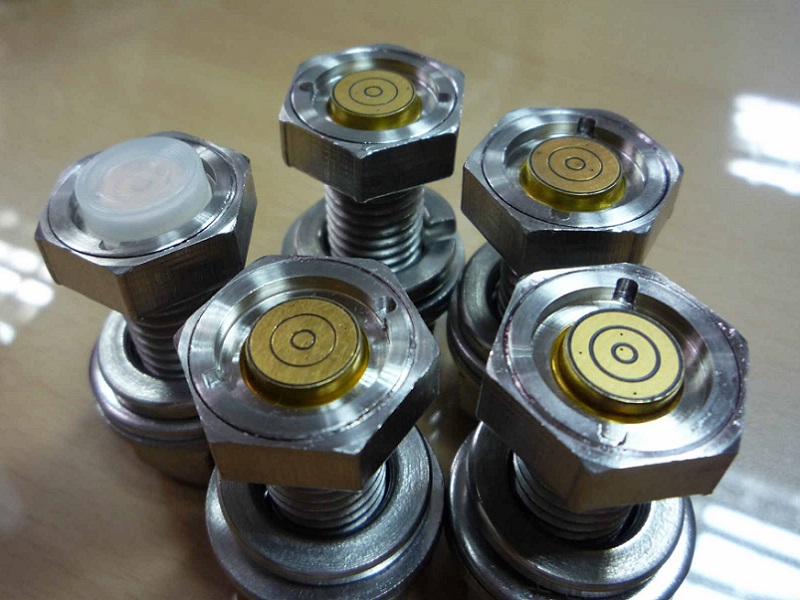
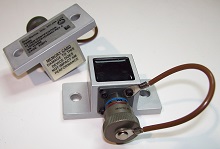
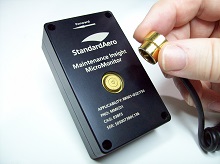
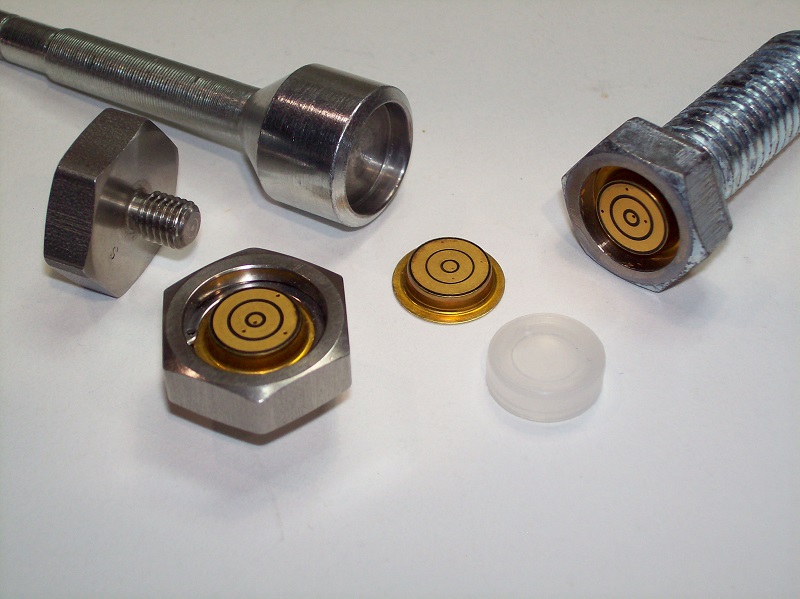
Electronic buttons, such as the MacSema ButtonMemory, can contain anywhere between 128 bytes and 32KB of information and are about the size of a dime.  When a supervisor, using a special reader, makes contact with the button, the calculation may be made on the spot when worker data, such as pay scale, is interfaced with the supervisor's recording device.  On some farms, workers are given a receipt so that they can keep track of their own progress and check it against their pay.

Back at the Ranch

Meanwhile, back at the ranch, he cowboys have found a whole different way to talk to the animals.  On dairy cows, beef cattle, hogs and sheep rugged button ear tags...allow ranchers to access information critical to efficient management of the huge herds that constitute the nation's meat and dairy supply.

A button tag on a dairy cow may pack more than ten year's worth of data covering genealogy, medical history, milk output, calving history, and other specifications that have to be updated continually...button tags can contain the entire life history of an animal instead of just its ID number, so the information is available to the rancher onsite as he or she is sorting through the animals with a handheld computer and ButtonWand.  This simplifies local data management; the animal is there, the data is there.  The ButtonMemory tags are nearly impossible to destroy and have a life expectancy of about a million read/write cycles over a 100-year life span.  Most buttons, such as the MacSema versions, have been ruggedized to withstand life in a herd of bovines.

"The reader/writer is about the size of a deck of playing cards," said Rose Sellew, a customer support representative at MacSema Inc.  "They're designed to withstand a lot; you can run a truck over them."  The buttons themselves meet military MIL-STD-810E standard for extremes in temperature, chemical immersion, moisture, electronic interference, and harsh treatment at the hands (and hooves) of its users......"We  are working on distance reading for buttons," Ms. Sellew explained.  "But standards are not yet in place, and it doesn't make sense to continue developing until standards are set in the RF industry."

When deciding which technology to use, ranchers and farmers must decide what they can afford and what form their database must take to suit their needs and meet their goals.

For example, a database may serve to verify that an animal has been raised free of chemicals and inoculations, letting the rancher collect a premium in some markets.  Information regarding processing procedures in the slaughterhouse may be added to the animal's database as it interfaces with the processing plant's database.  Ever-changing federal processing standards must be met and the information logged into the traveling database to confirm that they've been met.

On a sow, a tag will also register a lifetime of events, particularly her farrowing schedule.  A farm has a limited number of  farrowing, or birthing crates.  In an ideal situation, all the crates are filled with sows and piglets.  Farmers can keep records on a sow's farrowing schedule and plan ahead for piglets....

Technology has had an ever-increasing presence in most aspects of our lives.  The agricultural industry is no different, yet its adoption of high-tech tools has been slow.  Some attribute it to a conservative attitude and a wariness of new and different ways. Others assert that the profit margin is thin, making it difficult to convince a farmer that it is worth the investment.

But there's no going back for those who have already adopted AIDC.  Using handheld terminals, farmers and ranchers have eliminated hundreds of hours a year of odious manual data entry;  AIDC lets them capture events in the present in order to plan for the future.

Excerpt from IDSystems Article  August 1998
Clare Innes, Associate Editor


back to Top


Home ProductsSolutionsDevelopersNews | About | Contact | Search
© 2001 MacSema, Inc.  All rights reserved. Legal