Case Study 

AUTOMATIC I.D. News November 1998 

Raytheon Controls Payroll Costs With Bar-Code Badges

Scanning badges accurately records ins and outs of hundreds 
of construction workers at coke battery site


By Hallie Forcino

On a large construction site, keeping track of a variable, mobile workforce can be a time consuming challenge.  At a  coke battery project for Indiana Harbor coke in East Chicago, IN, Raytheon Engineers and Constructors, Lexington, MA, selected an automated time and attendance system to record the daily comings and goings of anywhere from 100 to more than 1,000 workers on site.  Accurate time keeping allows Raytheon to control payroll costs and provide timely staffing information to craft supervisors each day.  

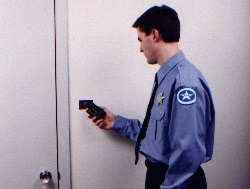
Each worker is issued a laminated ID badge laser-printed with "Raytheon," the employee's name and a Code 39 bar code "license plate" representing the employee's number.  Badges are scanned with a portable scanner as employees enter and leave the site.  Depending on the number of workers expected on a given day, there may be up to a half -dozen employees stationed at the gates scanning badges.

"In a union craft environment, you have to be very quick and accurate and not hold people up from proceeding in or out of the work site," explains Alan Corder, Raytheon's administrative manager on the multimillion-dollar, 18 month construction project.

You have to get up pretty early...

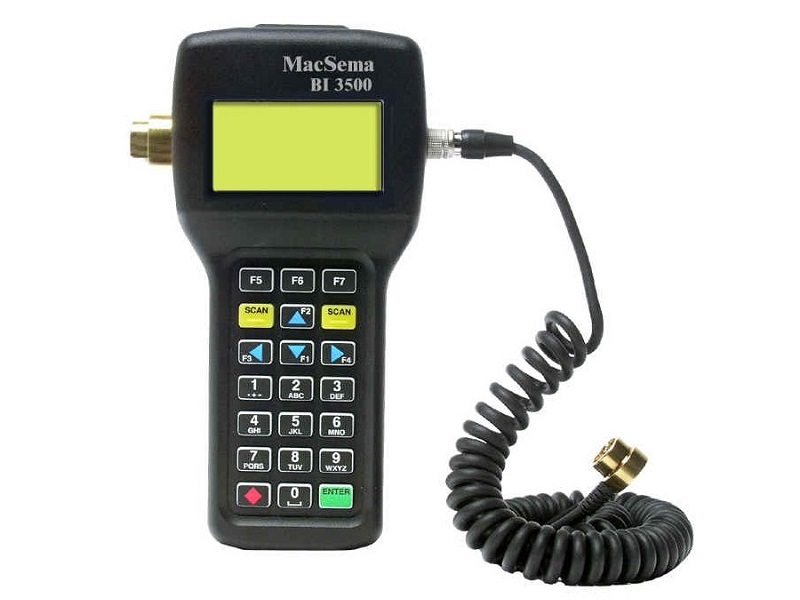
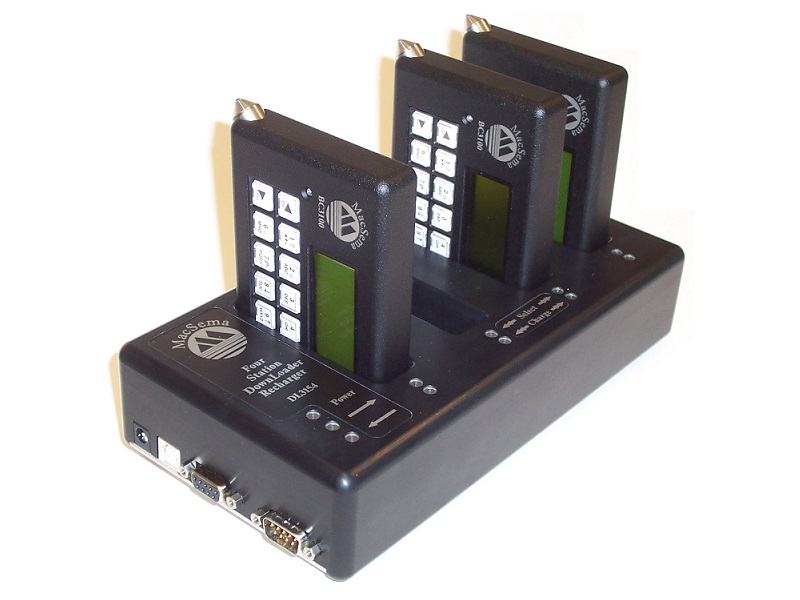
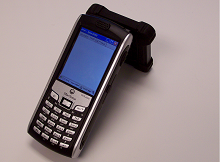
At 7 a.m. as workers pass through the gates, badges are scanned with a hand-held MO Wand II from system integrator Konetix that registers employee number, time and date.  Each scanner typically is used to collect about 150 scans, although units actually can hold 3,600 scans on a single charge.  By 7:15, scanners are returned to the office trailer and set in the Konetix TimeCentre  MO-Master docking center/charger.  The docking station accommodates 6 or 7 scanners simultaneously and serves as a recharging unit as well as a data transmission device.

Data from the scanners is uploaded in about five minutes through the MO-Master to a Pentium 233 personal computer from Compaq Computer.  It's equipped with Konetix's Time Centre software, a Windows-based time, attendance and labor tracking system with a built-in ODBC-compliant Microsoft Access database.  Out on the site, supervisors begin to organize crews and make assignments.

Reports help organize workforce

From the data collected, various reports are generated and sent to a LaserJet 5M from Hewlett-Packard.  Absentee reports are issued to the supervisors by 8:00 a.m. so they know which crews or portions of crews are missing and can regroup workers as necessary.  After running personnel present and absent reports, a force report is generated that shows attendance by craft.  Craft deployments can range from eight to more than 100 workers.  "The force report is a management tool used to determine overall effectiveness of the workforce," explains Corder.

Throughout the day, scanners are left in the docking station to charge.  "When scanners are used an hour in the morning and an hour at night at the most, units maintain a good charge.   We've never had a battery go down or be depleted," says Corder.  He also reports no problem with memory effect, where battery power diminishes over time due to repeated partial recharging.

At quitting time, badges are scanned as workers exit.  After recording employee number, date and time, scanners are returned to the docking station and data is uploaded to the PC.

The system matches in and out times and computes how many hours each employee was present.  That report is used to verify time reporting for payroll and confirm manual time sheets supervisors complete to record the different tasks being performed.  "TimeCentre reports validate an employee was present for the stated period," says Corder.

Workers who arrive or leave outside the usual starting and quitting times sign in and out, and this information is keyed into the system to ensure a complete database.

Searching for the right system

When Corder was looking for a timekeeping system for the coke battery project in Indiana Harbor, he had several criteria.  He wanted a system that would:

  • Operate without power

  • Offer portability

  • Withstand severe environmental conditions

  • Collect information for a database

  • Provide quick and accurate data collection

  • Be inexpensive

After hearing Corder's wish list, Brian Smith, a sales rep for Konetix, recommended the TimeCentre Mobility System and explained that it would meet his requirements much better than a conventional time clock.  "On previous job's  we've mostly used a manual system," recalls Corder.  In manual systems, each employee is issued a brass tag with a number on it.  It is picked up as the worker arrives on site each day and replaced as he or she leaves.  "It's very labor intensive.  The brass has to be housed and the employee has to come and go at the same location each day or the brass isn't available. The manual system poses a lot of logistical problem's,"  recalls Corder.

"With bar cod reading, logistics isn't a problem.  We can read anybody at any location," he reports.  Bar coding also is economical.  "It's a lot less expensive than magnetic [stripe] cards.  We didn't want to spend much money," he admits, nothing with bar coding, "we're well under budget on this particular activity."

Bar coding also makes it easy to replace a lost or damaged badge since badges are created on the PC and simply printed by the laser printer.

To improve durability, the paper is laminated on a professional desktop laminating system  from Ibico, using locally purchased Ibico supplies.  "We order the ID badge-sized (25/8 by 37/8-inch) badge envelope, slip the laser-printed paper inside and run it through the laminator," reports Corder.

Accuracy is a key

Another major benefit of the system is accuracy.  "We had an [automatic data collection] system on another project about three years ago and experienced a lot of misreadings," Corder recalls.  "The scanner would record a partial number, so we knew we had a reading, but not who it was.  As a result, we had to spend a lot of time investigating  With the TimeCentre Mobility system, we haven't had any faulty readings.  Since it beeps to indicate a good reading, the operator knows when a badge doesn't scan."  In the event  a badge doesn't scan, the scanner is bypassed and the employee signs in.

The time/attendance system proved to be easy to implement.  "There was just the usual learning curve you encounter whenever you learn new software," reports Corder.

The only other challenge with the installation involved preparing and issuing the first group of badges.  Since the system went live immediately, personnel had to scramble to ready the 100 badges needed for the first day.

Over the course of the project, there's only been one change: Konetix upgraded the software to better handle the volume of workers on site each day, which at the project's peak numbered more than a 1,000.

Corder has been so satisfied with the performance of the system, he hopes to take it with him on his next assignment.

back to Top


Home ProductsSolutionsDevelopersNews | About | Contact | Search
© 2001 MacSema, Inc.  All rights reserved. Legal